

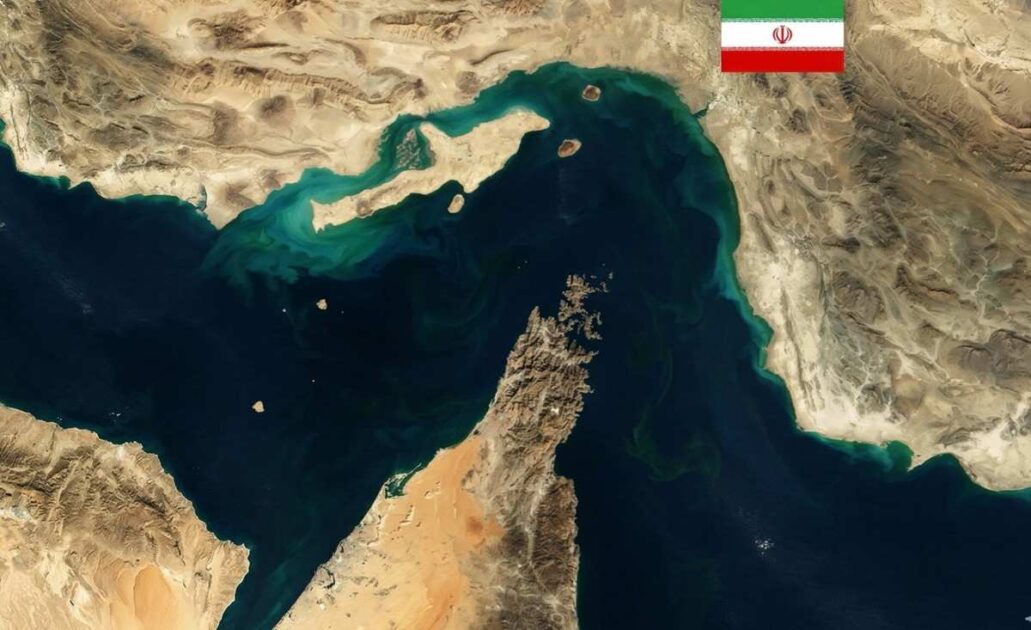

Iran’s parliament speaker and foreign ministry separately denied any direct negotiations with the United States on March 23–25, 2026, calling President Trump’s claims of productive discussions “fake news,” while the Strait of Hormuz remains closed, blocking roughly 20% of the world’s daily oil and LNG supply.
WASHINGTON / TEHRAN, March 26, 2026 — Iran’s Parliament Speaker Mohammad Bagher Ghalibaf publicly denied any direct negotiations with the United States on March 22, stating that “no negotiations have been held with the US” and that reports of ongoing talks were “fake news” designed to influence oil and financial markets, according to posts on X and confirmed by BBC and Times of India. Iran’s Foreign Ministry spokesperson Esmaeil Baghaei separately acknowledged that Tehran had received diplomatic messages from Washington via intermediary nations — but confirmed that no direct talks have taken place in the 24 days since the war began.
The denial landed at an awkward moment. President Donald Trump had told reporters just hours earlier that the US was in contact with a “respected” senior figure inside Iran — widely reported by Israeli media to be Ghalibaf himself — and that there were “major points of agreement” in the discussions. Ghalibaf‘s swift, public rejection was not just a diplomatic response; it was an act of internal political self-preservation. By being named as a secret negotiating partner by Israeli media, he faced immediate domestic pressure inside Iran, according to NDTV and CNN. Denying the talks was, in part, a survival move.
That dynamic — where Iran’s public posture is hardened partly by domestic political cost — helps explain why the gap between Trump’s claims and Tehran’s denials may be smaller than it appears. Baghaei confirmed that US messages, relayed through Pakistan, Egypt, and Turkey, were received and answered. What Iran is rejecting is direct negotiation under active military bombardment, not communication altogether.
What almost no outlet has clearly reported is the fifth condition on Iran’s list of ceasefire demands, confirmed by WION on March 25: Tehran is requiring international recognition of its sovereign right to exercise authority over the Strait of Hormuz. The other four conditions — a complete halt to strikes by the US and Israel, guaranteed mechanisms against reimposition of war, payment of war reparations, and end to hostilities across all regional fronts — have precedents in past diplomatic frameworks. The Hormuz sovereignty clause does not. Washington has never accepted any arrangement that gives Iran jurisdictional control over a waterway through which the US Navy and global commercial shipping must pass. Accepting that condition would fundamentally alter American naval freedom of movement in the Persian Gulf.
The Strait of Hormuz has been under Iranian closure since March 4, 2026, according to a US Naval Institute report to Congress published March 12. The waterway handles approximately 20% of the world’s daily oil and liquefied natural gas supply. Brent crude has risen to near $119–$120 per barrel since the blockade began, according to Reuters and Bloomberg. In north-east Asia, LNG spot prices more than doubled to around $22.50 per MMBtu, per energy analysis from IG Group. In the United States, retail gasoline prices rose approximately 18 cents per gallon within the first 48 hours of the Strait’s closure, according to USA Today.
For India, the exposure is structural. Nearly 40% of India’s crude oil imports are routed through the Strait of Hormuz, according to News18’s analysis. Iran has confirmed coordinated safe passage for Indian vessels, according to India Today — but that protection does not cover Indian refiners dependent on supply from Saudi Arabia, the UAE, or Kuwait, all of which move crude through the same blocked passage. A prolonged closure would push fuel prices higher, raise fertiliser and food costs, and increase fiscal pressure through higher subsidy obligations.
The broader conflict continues to expand. Iran struck Kuwait International Airport on March 25, extending the military footprint into Gulf Arab territory, per Euronews. A joint statement from the UK, France, Germany, Italy, and the Netherlands published March 20 called on Tehran to cease hostilities, including the laying of mines in the Strait, according to Sweden’s government statement portal. The White House warned Trump would “unleash hell” if no deal was reached within four days, according to CBS News, while simultaneously announcing a five-day pause on striking Iranian energy and power infrastructure — a contradiction that Tehran read not as goodwill, but as a signal that the military campaign was running into limits.
Iran’s Foreign Minister Abbas Araghchi stated as recently as March 15 that “we have not sent any message and we have not requested a ceasefire,” per Iran International. That position has not changed. The war began on February 28, 2026, when US and Israeli forces launched coordinated strikes on Iran, killing Supreme Leader Ayatollah Ali Khamenei and senior IRGC commanders. Pakistan remains the most active diplomatic intermediary, having delivered Trump’s 15-point plan to Tehran and offering its territory as a potential venue for direct talks, according to Fox News.
The structural deadlock is not primarily about whether talks are happening or not. It is about what Iran has put on the table as a condition for opening the Strait. Giving up sovereignty over Hormuz is a demand that any US administration — regardless of political pressure — cannot formally accept without conceding strategic control over the world’s most critical oil shipping lane. Until that condition changes or is quietly dropped through backchannel negotiation, Brent crude near $120 is not a temporary war shock. It is the new floor.
