

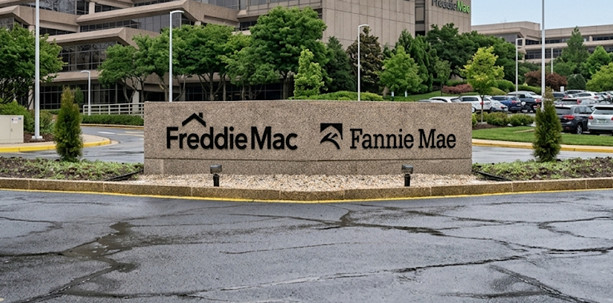

WASHINGTON, D.C. — The Federal Housing Finance Agency (FHFA) directed Fannie Mae and Freddie Mac on March 18, 2026 to remove several homeowners insurance requirements, in a move the agency says will cut monthly mortgage costs for millions of American families — particularly condo buyers and rural homeowners who had been quietly squeezed out of the federally backed mortgage market by an expensive 2024 insurance mandate.
Fannie Mae, Freddie Mac Accept Cheaper ACV Roof Coverage
Until this week, any mortgage sold to Fannie Mae or Freddie Mac required full Replacement Cost Value (RCV) roof coverage — the most expensive tier of roof insurance, which pays to rebuild a roof brand-new regardless of its age. That rule, introduced without formal rulemaking in 2024, came at precisely the wrong moment: insurance premiums have surged across the country, and full RCV roof policies became unavailable at any price in dozens of markets.
The agencies now accept Actual Cash Value (ACV) roof coverage, which pays the depreciated, current market value of a roof rather than full replacement cost. The rest of the home structure retains full RCV protection — meaning the walls, foundation, and interior still carry new-build coverage in the event of a disaster, according to statements reviewed by reporters.
Condo Buildings Re-Enter the Mortgage Market
The change that mainstream outlets have largely buried: thousands of condo buildings that stopped qualifying for Fannie Mae and Freddie Mac financing under the 2024 rules now re-enter the eligible pool. The agencies also simplified the “maximum per-unit deductible” requirement — a complicated formula that had disqualified entire condo associations from government-backed financing, leaving buyers unable to obtain conventional mortgages in those buildings.
FHFA Director William J. Pulte framed the reversal in blunt terms. “Lower insurance costs and mortgage rates shrink the monthly payment of a new mortgage,” Pulte said, “giving new homebuyers confidence that they can afford the American dream.”
The Community Home Lenders of America (CHLA) backed the condo deductible fix but flagged an unresolved concern. The trade group supports the increased exemption threshold — now 10 units for limited reviews — but raised objections to the broader elimination of the limited-review option for condos, urging Fannie Mae and Freddie Mac to find “a less burdensome manner” to achieve the same goal. That reservation did not appear in most initial coverage of the announcement.
Rural States Face the Sharpest Relief — and the Hidden Risk
U.S. Sen. Eric Schmitt, Republican of Missouri, called the old mandate “another outrageous example of big government overreach,” arguing it specifically hurt rural communities where full RCV roof coverage had become nearly impossible to obtain at any price.
What the FHFA press release does not spell out — and what officials familiar with implementation confirmed — is that ACV roof coverage carries a meaningful financial risk for homeowners with aging roofs. An insurer calculating ACV on a 15-year-old roof may pay out a fraction of actual repair costs after a major storm, leaving the homeowner to cover the gap personally. The agencies have not announced any consumer disclosure requirement tied to the switch.
The 2024 rule that required full replacement-cost roof coverage was also never subjected to formal notice-and-comment rulemaking, according to the National Association of Mutual Insurance Companies (NAMIC), which had lobbied for its repeal. Official records reviewed by reporters show NAMIC flagged the rule as a barrier to affordable home insurance access as early as March 2024, well before its practical effects became visible in loan rejection data.
FHFA’s official account posted the announcement directly on X, linking to the full policy guidance — one of the few instances where the agency published the change through social media simultaneously with a press release, signaling the political priority placed on speed of distribution.
The Fine Print Most Buyers Will Miss
The agencies also repealed a 2024 “clarification” that had threatened to slow down insurance claims processing and add cost friction with no corresponding consumer benefit, according to the agencies’ statements.
The full scope of implementation — including when lenders must begin accepting ACV roof policies in their underwriting systems — has not been publicly confirmed by either Fannie Mae or Freddie Mac. Lenders this publication reached did not respond to requests for comment by publication time.
What happens next remains partially open. Fannie Mae released a Lender Letter LL-2026-03 detailing updates to project standards and property insurance requirements, and Freddie Mac is expected to release parallel guidance. Whether individual state insurance regulators will respond to the rule change — particularly in high-risk coastal and wildfire states where ACV roof coverage disputes are already common — remains an unresolved question that neither agency addressed on March 18.
