
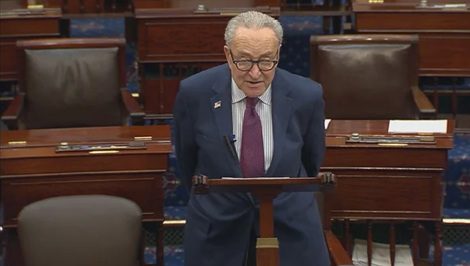
The US Senate rejected a Democratic ICE reform package on Wednesday, extending the DHS funding shutdown into its 41st day and deepening a staffing crisis that has left more than 480 TSA officers resigned, airports running at dangerous capacity, and no clear path to resolution before Congress leaves for spring break.
WASHINGTON, D.C. — The US Senate failed for a sixth consecutive time on Wednesday, March 25, to advance a Department of Homeland Security (DHS) funding measure, according to congressional records, as more than 480 transportation security officers quit their posts — leaving the nation’s airport security infrastructure in what acting TSA Administrator Ha Nguyen McNeill called “a dire situation.”
The political impasse is visible at every major terminal. Houston’s George Bush Intercontinental Airport had only two of eight security checkpoints open for much of this week. TSA PreCheck and CLEAR lanes — programs millions of travelers pay for to avoid long lines — were shut down entirely. Atlanta, JFK, and New Orleans recorded absentee rates above 30 percent, while Hobby Airport in Houston hit 40 percent.
What most reporting buries is this: the TSA is not just losing workers to frustration — it is losing them permanently, with no fast path to replace them. McNeill told the House Homeland Security Committee on Wednesday that new hires require four to six months of training before they can be cleared for checkpoint duty. Every officer who walks out today creates a gap that cannot be filled for half a year, even if Congress resolves the shutdown tomorrow.
McNeill testified that TSA officers across the country have experienced a more than 500 percent increase in assaults since the shutdown began on February 14. Officers working without pay are increasingly unable to manage passenger frustration at hours-long queues, and the agency has no mechanism to immediately address either the staffing gap or the safety deterioration.
The financial toll is equally stark. TSA has missed nearly $1 billion in cumulative worker payments since the fiscal year began on October 1, 2025 — a figure that accounts for both the current DHS shutdown and the 43-day full government shutdown that preceded it in the fall. Some officers are donating plasma to cover rent. Others have received eviction notices. McNeill told lawmakers some are sleeping in their vehicles between shifts.
Senate Majority Leader John Thune dismissed the Democratic counterproposal — which included barring ICE agents from wearing face masks during operations and requiring judicial warrants before agents enter private property — as going “in circles”. Senate Minority Leader Chuck Schumer called his caucus’s offer a “good-faith” submission. Neither side budged.
The underlying dispute remains the same: Democrats are demanding reforms to ICE‘s Enforcement and Removal Operations division, triggered by the fatal shootings of two US citizens by federal agents in Minneapolis in January. Republicans have proposed funding all of DHS except $5.5 billion earmarked for that division, with a plan to fund ICE separately through a partisan bill tied to voter ID legislation — a condition Democrats have flatly rejected.
President Trump escalated the pressure Thursday morning, calling on Republican senators to eliminate the 60-vote filibuster threshold to advance DHS funding unilaterally. Thune has said there is insufficient conference support for that move. Meanwhile, the Senate is scheduled to depart for a two-week Easter recess by the end of the week, and House Republican leaders have signaled no willingness to cancel their own spring break to reconvene.
If the shutdown extends through Saturday, it will tie the 43-day record set during last autumn’s full government shutdown — the longest in US history. If it extends further, it becomes the new record, entirely on its own.
The deepest problem here is structural, not political. Bipartisan resolution — if it comes — will end the pay freeze. But it will not immediately restore airport security capacity. With nearly 50,000 TSA officers having worked without pay since February 14, and an accelerating resignation rate that training pipelines cannot quickly replenish, American airports may face a slow-motion staffing crisis for months after any deal is signed.
