
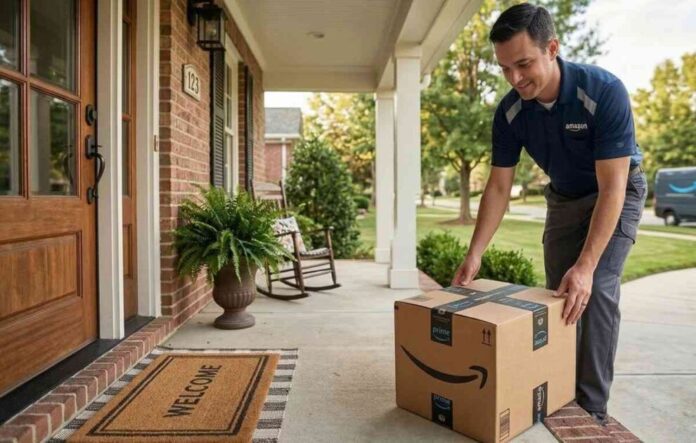
NEW YORK — Amazon launched 1-hour and 3-hour paid delivery options across the United States on Tuesday, March 17, making the service available in more than 2,000 cities and towns, according to an official company announcement, and immediately drawing attention for the additional fees charged to subscribers who already pay for Prime membership.
Prime Members Still Pay Extra
The critical detail buried in Amazon‘s rollout: the new speed tiers are not free additions to a Prime membership. Prime subscribers pay $9.99 per order for 1-hour delivery and $4.99 for the 3-hour option. Non-members face steeper charges of $19.99 and $14.99 respectively. Standard same-day delivery remains free for Prime members on qualifying orders — but that is an entirely separate tier, and the distinction is not prominently flagged in the launch materials reviewed by this newsroom.
Who Gets the Service
The 3-hour option covers more than 2,000 cities, towns, and suburban areas — including smaller communities like Cornwall, Pennsylvania; Harrah, Oklahoma; and Arabi, Louisiana. The 1-hour tier is narrower, available in hundreds of locations including major metros such as Los Angeles, Chicago, and Washington, D.C., as well as mid-size cities like Des Moines, Iowa and Boise, Idaho. Customers can check their address eligibility at amazon.com/getitfast.
The program covers a catalog of 90,000 items spanning pantry goods, cleaning supplies, over-the-counter medications, electronics, clothing, and toys.
The Fee That Changes the Conversation
Data reviewed by this newsroom from Amazon‘s own pricing pages confirms that the fee structure applies regardless of basket size — meaning a customer paying $9.99 for 1-hour delivery on a single bottle of ibuprofen priced at $7 would pay more in delivery charges than for the product itself. There is no disclosed minimum order threshold required to trigger the fee waiver, and Amazon has not announced any plans to make either tier complimentary.
That stands in contrast to how Prime‘s value proposition is typically marketed. The membership, which costs $139 annually, has long been anchored by “free” and fast shipping — a framing that the new tiers quietly complicate.
The Walmart Factor
The launch lands squarely in the middle of Amazon‘s intensifying battle with Walmart, which has leveraged its network of more than 4,600 U.S. stores to offer same-day delivery to a vast majority of American households. Walmart currently holds approximately 40% of all U.S. online grocery sales, according to data from Brick Meets Click cited by Retail Brew.
Amazon delivered more than 13 billion same- or next-day items globally in 2025, a company record, with U.S. Prime members accounting for over 8 billion of those — a 30% jump from 2024. Roughly half were groceries and everyday essentials.
Infrastructure Behind the Speed
Amazon‘s ability to offer 1-hour windows at scale stems from years of investment in regionalized fulfillment — placing inventory physically closer to customers before they order, using predictive systems to anticipate demand. The company has spent the past two years expanding same-day grocery delivery to over 2,300 cities and extended free same-day and next-day shipping to more than 4,000 rural towns.
Separately, Amazon is testing a 30-minute grocery delivery program under the name Amazon Now in Seattle and Philadelphia, priced at $3.99 per order for Prime members, which covers hundreds of household staples and fresh foods. That pilot has not yet been announced for wider rollout.
The Amazon post announcing the new delivery options was published directly to the company’s official X account:
Whether the fee structure dampens adoption — particularly among Prime members who feel the additional charge contradicts the membership’s core promise — remains an open question. Amazon declined to share early adoption data or a timeline for expanding 1-hour delivery beyond its current metro footprint.
