
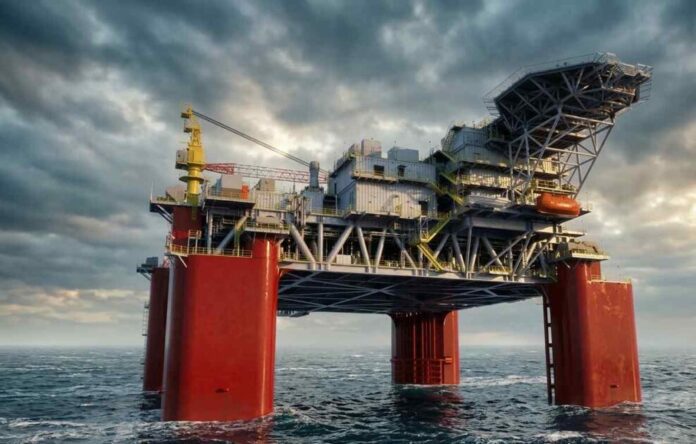
WASHINGTON, D.C. — The Trump administration on Friday approved BP’s $5 billion Kaskida oil project in the Gulf of Mexico, giving the green light for the region’s first completely new oilfield since the 2010 Deepwater Horizon disaster, according to the Department of the Interior, instantly expanding offshore drilling limits.
The decision reverses an August 2025 rejection from federal regulators over critical safety concerns. The approval immediately clears the British energy giant to deploy new 20,000 psi drilling technology in ultra-deep waters, opening a geological frontier that holds 10 billion barrels of crude but carries staggering environmental risk.
The authorization directly impacts deepwater energy workers and coastal residents across Louisiana and Texas. The offshore energy sector gains a massive financial lifeline, while environmental groups warn that millions of Gulf Coast citizens face the immediate threat of a catastrophic blowout if the unproven hardware fails.
Unprecedented 20,000 PSI Technology Exposes BP Kaskida Risks
Project proposals and environmental assessments reviewed by this publication reveal a buried admission within the approved plan. A loss-of-control incident at the extreme-pressure site would take up to 100 days to cap, potentially discharging 4.5 million barrels of oil directly into active Gulf currents.
In New Orleans, Louisiana—located just 250 miles northeast of the drill site—environmental advocates are raising alarms over the rapid federal pivot. Meanwhile, industry contractors in Houston, Texas, are already mobilizing engineering crews to build out the massive seabed infrastructure required for the extreme depths.
The Bureau of Ocean Energy Management originally blocked this exact proposal late last year. Regulators previously cited the company’s failure to meet safety standards, explicitly calling out BP for underestimating potential worst-case spill volumes by 500,000 barrels before the administration pushed the approval through this week.
“These high-pressure wells are seven times more likely to blow out,” an Earthjustice spokesperson said.
Buried Federal Documents Reveal BP Kaskida Blowout Dangers
For nearly 20 years, the Kaskida field sat untouched because engineers lacked the metallurgy and sheer mechanical force required to handle the punishing geology. Modern innovations now allow offshore operators to work in environments reaching 20,000 pounds per square inch, shattering previous operational limits.
The stakes of operating at these new extremes mirror the devastating consequences seen over a decade ago, as detailed in Earthjustice’s offshore drilling hazard report highlighting the unique dangers of Paleogene fields.
| Metric | Kaskida Project | Macondo Well (2010) |
|---|---|---|
| Depth | 6,200 feet | 5,000 feet |
| Pressure | 20,000 psi | 15,000 psi |
| Spill Risk Volume | 4.5 million barrels | 4.0 million barrels |
BP plans to execute the unprecedented development in three distinct phases:
- Constructing a specialized semi-submersible production platform by 2027
- Drilling the initial extreme-pressure subsea wells throughout 2028
- Pumping 275 million barrels during the first production cycle in 2029
The offshore energy sector immediately celebrated the technical breakthrough required to unlock the paleogene fields.
Industry advocates view the high-pressure technology as a necessary evolution for American energy dominance, regardless of the environmental pushback. The approval fits into a wider strategy to maximize domestic energy production across the continental shelf. Officials also greenlit the separate $5 billion Tiber-Guadalupe project, signaling a massive regulatory shift toward ultra-deepwater extraction.
Kaskida remains part of a broader corporate push to grow Gulf production to 400,000 barrels per day by 2030. Federal regulators will now monitor the initial construction phases, with pre-drilling seabed surveys expected to begin next month.
