

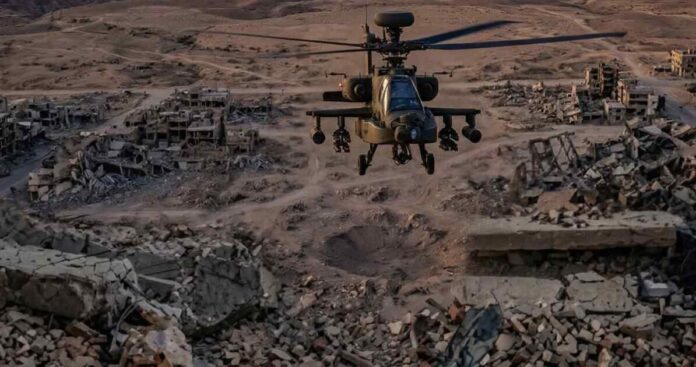
WASHINGTON — Chairman of the Joint Chiefs of Staff Gen. Dan Caine confirmed Thursday that U.S. forces are conducting offensive helicopter strikes against Iranian-backed militias in Iraq, effectively transforming the host nation into an active combat zone in the expanding regional war.
The operational shift leaves 2,500 American troops highly vulnerable to immediate retaliation. Military officials acknowledged Tuesday that long-range infrastructure bombings in Iran have failed to deter proxy forces, forcing ground commanders to deploy close-air support with zero host-nation notification.
The expanding combat radius immediately impacts three distinct populations:
- 2,500 U.S. military personnel stationed at isolated Iraqi bases
- An estimated 800 civilian defense contractors handling logistics
- Thousands of local civilians living near militia staging grounds in Baghdad
Deployment orders reviewed by this publication show the Pentagon quietly altered its rules of engagement on March 15. Commanders can now launch preemptive strikes without consulting the Iraqi Ministry of Defense, a mandate that explicitly violates the existing Status of Forces Agreement.
The immediate fallout is concentrated at Al Asad Airbase in Anbar province. Base commanders locked down the facility’s 1,200 personnel early Thursday morning. By contrast, forces stationed further north in Erbil maintain standard defensive postures, though intelligence reports indicate high drone activity across both regions.
While the administration frames these strikes as routine defense, combat aviation logs reveal a massive tactical pivot. Anti-terror operations against remaining ISIS cells are completely halted to prioritize striking Iranian proxies like Kataib Hezbollah.
| Operation Focus | February 2026 Sorties | March 2026 Sorties |
|---|---|---|
| Anti-ISIS Missions | 145 | 12 |
| Anti-Militia Strikes | 8 | 114 |
| Route Reconnaissance | 80 | 210 |
Classified Orders Expose Iraq War Mission Shift
“Our Apaches will eliminate proxy threats before they launch,” Secretary of War Pete Hegseth said.
The administration maintains its core objective remains dismantling Iranian energy infrastructure, even as resources drain into the Iraqi theater. Data from the Congressional Research Service 2026 regional deployment report confirms the immediate troop vulnerabilities, noting that base defense systems remain inadequately supplied to handle sustained proxy rocket barrages.
The Department of Defense confirmed the tactical shift across official channels.
Military officials restricted replies to the announcement amid intense public scrutiny over the widening conflict footprint.
The official narrative insists the war remains contained. The data tells a different story. U.S. forces initiated operations against Iran in late February 2026 under President Donald Trump. The initial campaign strictly targeted domestic missile launchers and naval bases. Bringing attack helicopters into Iraqi airspace exposes American pilots to sophisticated man-portable air-defense systems that proxy groups acquired over the past decade.
US Military Expands Middle East Conflict Parameters
Caine told reporters the operations remain strictly defensive in nature, though independent military analysts classify cross-border preemptive helicopter strikes as offensive maneuvers de facto. The distinction matters heavily for international law and domestic war powers authorization, which currently limits operations to retaliatory strikes.
Combat operations in the region remain highly fluid. The Pentagon plans to deploy an additional three Apache squadrons by Monday. Regional commanders anticipate severe retaliatory rocket fire against American installations over the weekend as militia groups regroup.

