

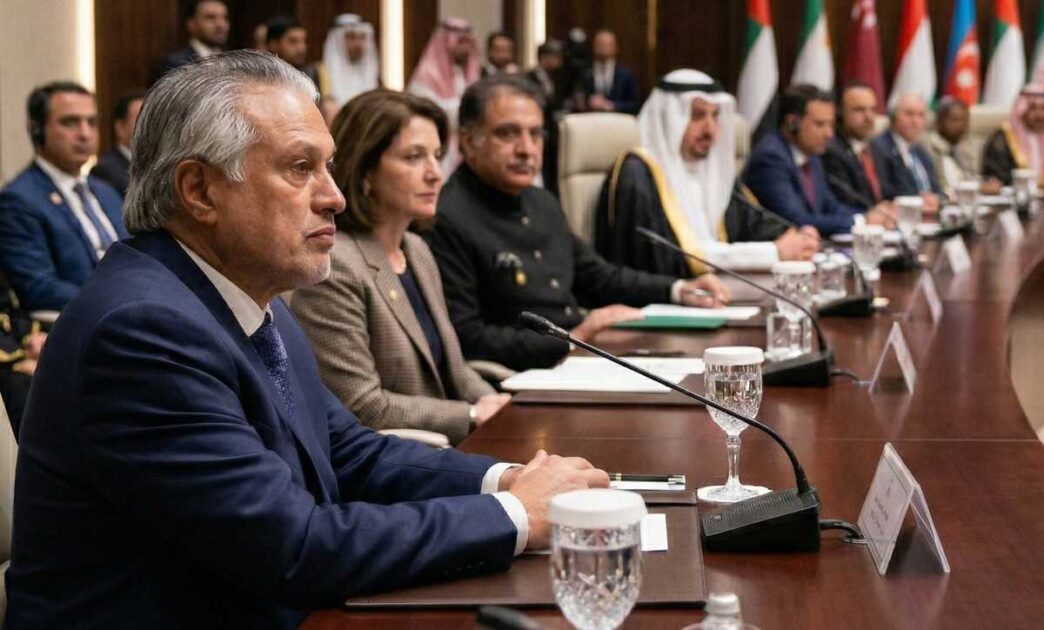

Pakistan’s quiet intervention to shield Iran’s top diplomats from Israeli strike lists is the only thread keeping back-channel talks alive — even as Tehran formally rejects Washington’s 15-point ceasefire proposal.
ISLAMABAD/TEHRAN — Iran formally rejected a 15-point ceasefire proposal transmitted by Pakistan on behalf of the United States, state broadcaster Press TV reported on Wednesday, even as a parallel back-channel maneuver by Islamabad — convincing Washington to temporarily remove Iranian Foreign Minister Abbas Araghchi and Parliamentary Speaker Mohammad Baqer Qalibaf from an Israeli assassination target list — kept fragile diplomatic channels from collapsing entirely.
The twin developments expose the core contradiction running through the entire mediation effort: the US publicly claims talks are “productive,” while Iran’s ambassador to Pakistan flatly denied on Wednesday that any negotiations, direct or indirect, had even taken place.
“According to my information — and contrary to Trump’s claims — so far no negotiations have taken place between the two countries,” ambassador Reza Amiri Moghadam told reporters in Islamabad, describing the outreach from friendly countries as a natural consultative process, not structured talks.
Assassination list and the price of keeping a channel open
The most consequential disclosure came via Reuters, which reported that Pakistani officials persuaded Washington to persuade Israel to suspend assassination operations against Araghchi and Qalibaf for a window of four to five days. The rationale, according to a Pakistani source, was blunt: “We told the US if they are also eliminated then there is no one else to talk to.”
The Wall Street Journal first reported the removal of the two officials from active target lists. The detail matters because it reveals the real operating conditions of this diplomacy: negotiators are not in a secure conference room — they are functioning inside an active warzone where the people being asked to receive proposals are simultaneously being hunted.
A senior Iranian official told Reuters separately that Tehran was still reviewing the US proposal despite its initial negative response, suggesting the rejection may be more tactical posturing than a final answer. The same official confirmed that either Turkey or Pakistan was under consideration as a physical venue for future discussions, and that Pakistan had physically delivered the US document to Tehran.
What Washington wants, what Tehran demands
Washington‘s 15-point plan, first reported by The New York Times and Israel‘s Channel 12, is built around three core demands: full dismantling of Iran‘s nuclear programme, limits on its ballistic missile arsenal, and reopening the Strait of Hormuz as a free maritime corridor in exchange for a complete lifting of sanctions.
Tehran‘s five-point counter-proposal goes in the opposite direction. It demands a permanent halt to all US and Israeli military operations, war reparations, protections for allied groups including Hezbollah, and — most critically — international recognition of Iranian sovereignty over the Strait of Hormuz. That last demand is a structural non-starter for Washington, which views freedom of navigation in the waterway as a core strategic interest.
The Strait remains the most tangible pressure point. Approximately 3,000 vessels are currently stranded in or near the Persian Gulf, according to maritime tracking data reported by ABC News, with Iran restricting passage to ships linked to the US, Israel, and their allies. On Friday, the US Treasury lifted sanctions on Iranian oil at sea — a move Treasury Secretary Scott Bessent claimed would release around 130 million barrels into global markets — but maritime analysts quoted by ABC News questioned whether the concession would meaningfully ease supply chain pressures while tankers remain physically immobilised.
The conflict, which began on February 28, has now killed more than 1,340 people across the region, according to Anadolu Agency, with drone and missile strikes continuing to hit Bahrain, Kuwait, Jordan, and Saudi Arabia.
The deeper problem for mediators is one of credibility. Iran’s senior political-security official noted in a statement cited by Middle East Eye that Washington attacked Tehran twice — in June 2025 and again in February 2026 — while previous rounds of talks were still active. That history, more than any specific demand in the 15-point plan, is what makes Tehran structurally resistant to indirect overtures dressed up as goodwill gestures.
Until that trust deficit is addressed, the question is not whether Pakistan can get Iran and the US into a room — it is whether Tehran believes a room is safe to enter at all.
