

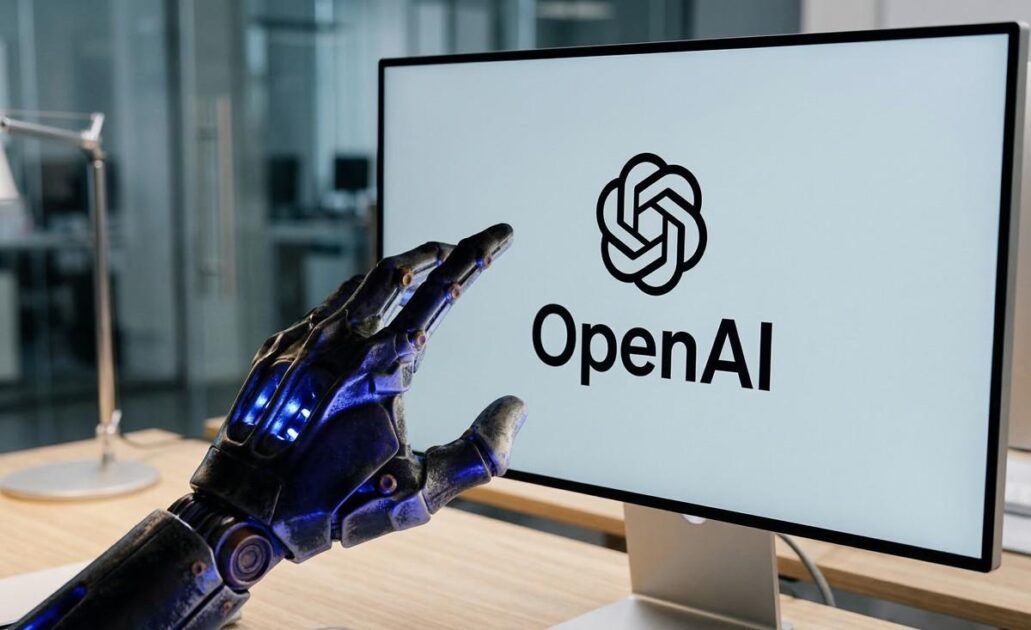

NEW YORK — OpenAI entered advanced negotiations with four major private equity firms — TPG, Advent International, Bain Capital, and Brookfield Asset Management — on Sunday, March 15, to form a joint venture aimed at distributing its enterprise AI products across thousands of portfolio companies and broader corporate markets, according to four individuals familiar with the discussions cited by Reuters.
The proposed venture carries a pre-money valuation of approximately $10 billion, with the private equity firms expected to collectively commit roughly $4 billion in equity. What most headlines buried is the structural detail that reshapes the story entirely: all four firms would secure board seats in the joint venture — giving them direct influence over how OpenAI’s technology gets deployed inside the companies they own. This isn’t a passive funding deal. It is a governance arrangement.
The firms that stand to gain from this structure collectively manage hundreds of billions of dollars in assets and control thousands of portfolio companies spanning healthcare, finance, manufacturing, and IT services. For their portfolio companies, the pitch is access to AI before the transition happens to them, not after.
TPG is expected to serve as the anchor investor, committing the largest share of the $4 billion. Advent, Bain, and Brookfield would participate as co-founding investors. According to individuals familiar with the matter, OpenAI is offering preferred equity to investors — a senior ownership class that provides priority returns over common shareholders and includes downside protection mechanisms. That structure matters: it signals OpenAI is negotiating from strength, not desperation.
OpenAI’s Frontier Platform at the Center
The joint venture would serve as a distribution engine for Frontier, OpenAI’s enterprise platform launched last month in partnership with consulting giants BCG, McKinsey, Accenture, and Capgemini. The platform pairs OpenAI engineers directly with consultants to integrate AI agents into core business operations — a model that requires deep corporate access, exactly what private equity board seats provide.
OpenAI’s enterprise business has already reached $10 billion in annualized revenue, out of a total annualized revenue base of $25 billion, according to data reviewed from multiple sources familiar with the company’s financials. The joint venture would accelerate the path toward making enterprise the majority of that base — a target OpenAI has set publicly for 2026.
“As demand for AI continues to surge, we aim to assist our clients in deploying these technologies in every effective way possible,” said Sim, CEO of OpenAI’s applications business, in a written statement — the only official response from the company on the venture. OpenAI, TPG, Advent, and Brookfield all declined to comment directly on deal specifics. Bain did not respond to inquiries.
Anthropic Runs a Parallel Play – With Less Protection
The less-reported context: OpenAI is not alone in this race. Anthropic is simultaneously in discussions with Blackstone, Permira, and Hellman & Friedman to establish its own private equity venture, focused on selling its Claude AI technology across buyout portfolios. The private equity firms involved in Anthropic’s talks are expected to contribute approximately $1 billion in exchange for equity stakes — a fraction of the $4 billion committed in OpenAI’s proposed structure.
The critical structural difference is this:
| Company | Equity Offered | PE Commitment | Board Seats |
|---|---|---|---|
| OpenAI | Preferred equity | ~$4 billion | Yes – all 4 firms |
| Anthropic | Common equity | ~$1 billion | Not confirmed |
Preferred equity gives OpenAI’s PE partners a priority claim on returns and a floor on downside risk. Anthropic’s common equity offer carries no such protections. In a race where corporate AI budgets are finite and brand loyalty is still forming, the firm that locks in preferred partners first holds a structural advantage — on paper, at least.
IPO Pressure Is Accelerating Both Deals
Three sources familiar with the discussions told Reuters that the urgency behind both companies’ PE outreach is tied directly to their plans for a public offering, potentially within 2026. Private equity partnerships serve a dual purpose: they generate enterprise revenue that inflates pre-IPO valuation, and they demonstrate distribution scale that institutional investors prize.
OpenAI closed a record $110 billion funding round in late February, anchored by SoftBank, NVIDIA, and Amazon, at a $730 billion pre-money valuation, according to OpenAI’s official announcement. The PE joint venture would exist separately from that capital raise — a different vehicle designed for distribution, not balance-sheet expansion.
What remains unconfirmed is the timeline. No final decision has been made, and individuals familiar with the matter warned that plans are subject to change. One source this publication reached declined to discuss specific deal terms. The question of whether all four PE firms ultimately sign — or whether the anchor deal is just TPG — has not been resolved publicly.
