

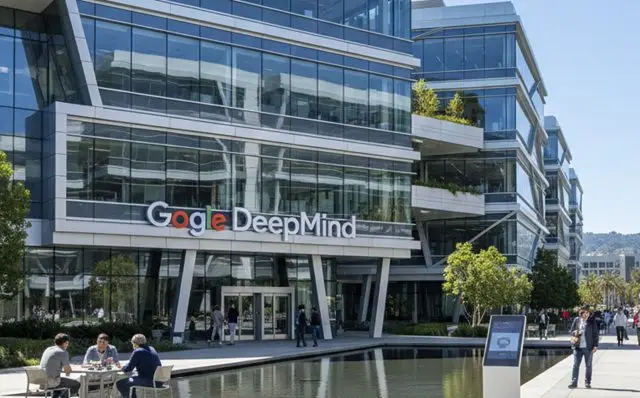
MOUNTAIN VIEW, Calif. — Google DeepMind completed three separate AI deals between January 23-24, 2026, acquiring Common Sense Machines outright, licensing Hume AI’s emotion-recognition technology while hiring its CEO and seven engineers, and investing in Tokyo-based Sakana AI, according to multiple industry reports, with the transactions collectively representing a new acquisition strategy designed to avoid traditional antitrust scrutiny.
The deals target three distinct AI capabilities: 3D object generation from 2D images, emotional intelligence in voice interfaces, and next-generation Transformer architecture research. What sets this week apart isn’t just velocity—it’s structure. The Hume AI transaction particularly stands out as neither full acquisition nor simple licensing, but a hybrid model industry observers now call “acqui-licensing.”
How DeepMind Structured Each Deal Differently
Common Sense Machines, a Cambridge, Massachusetts startup valued at $15 million with approximately 12 employees, joined DeepMind through a traditional acquisition, The Information reported. Co-founder Tejas Kulkarni previously worked at Google DeepMind. The company’s AI models convert 2D images into 3D objects—technology critical for spatial computing and robotics applications. Purchase price remains undisclosed.
The Hume AI arrangement follows a different playbook entirely. Google secured non-exclusive licensing rights to certain Hume AI technologies, according to Wired. CEO Alan Cowen, a psychologist by training, and roughly seven engineers moved to DeepMind to improve Gemini’s voice capabilities. Hume AI continues operating independently and projects $100 million in revenue for 2026, TechCrunch confirmed.
This licensing-plus-talent structure mirrors Microsoft’s 2024 Inflection AI deal, where the tech giant paid licensing fees and hired nearly all 70 employees without acquiring the company outright. That transaction triggered regulatory scrutiny from both Biden and Trump-era agencies over concerns about circumventing merger review.
Sakana AI received a strategic investment from Google, though the amount wasn’t disclosed. The Tokyo-based startup, now valued at $2.5 billion, was co-founded by former Google researchers David Ha and Llion Jones—the latter co-authored Google’s original Transformer architecture research paper that underpins modern large language models.
The Regulatory Advantage Behind Hybrid Deals
Traditional tech acquisitions now face heightened antitrust review. The U.S. Department of Justice is currently investigating whether Google’s $2.7 billion Character.AI agreement was structured to circumvent oversight, according to recent regulatory analysis. FTC Chairman Andrew Ferguson stated agencies are examining acqui-hires “to make sure they are not an attempt to get around merger review.”
Hybrid licensing structures potentially fall outside current regulatory frameworks designed for full acquisitions. By separating technology licensing from company ownership, tech giants can integrate elite AI teams in weeks rather than months while avoiding lengthy merger reviews.
Industry analysts identify this as a calculated shift. “The emerging narrative is one of a new M&A style, where ‘acqui-licensing’ and ‘alumni investment’ are replacing the traditional corporate buyout,” according to AI sector analysis.
The strategy carries risks. If regulators conclude these deals function as mergers in effect, the entire playbook could face legal challenges, making future talent acquisitions far more expensive and complex.
What DeepMind Gains From Each Transaction
Common Sense Machines brings 3D generation capabilities essential for advancing AI beyond text and standard imagery into spatial computing—technology needed for augmented reality applications and robotics.
Hume AI’s emotional recognition technology addresses a critical gap in voice interfaces. Current AI assistants struggle to interpret emotional context in human speech. The non-exclusive licensing means Hume can license its technology to other companies while Google benefits from having key engineers working directly on Gemini.
Sakana AI provides strategic positioning in Japan’s AI market, where OpenAI has established presence. The partnership plans to combine Google’s AI models with Sakana’s “AI Scientist” and “ALE Agent” technologies to accelerate AI-powered scientific discoveries, according to the partnership announcement. Both companies also aim to build solutions for financial institutions and government agencies with strict security requirements.
Sakana researches alternatives to current Transformer architecture—a frontier OpenAI’s recently departed top researcher Jerry Tworek identified as an important new research direction. The startup’s code agent, powered by Gemini 2.5 Pro, ranked 21st among the top 1,000 human coders in a recent coding competition.
Industry Pattern Emerges
Microsoft pioneered this approach in 2024, paying substantial licensing fees to acquire Inflection’s team without buying the company. Google followed with Character.AI talent acquisition. Now DeepMind’s triple-transaction week suggests the model is becoming standard practice.
The 2024 “talent heist” consolidated elite AI researchers into major tech companies, effectively ending what one market analysis called the “wild west era” for foundational AI startups. Remaining AI startups now face limited exit options as traditional acquisition routes become legally uncertain.
For DeepMind, the timing positions Gemini’s next iteration with enhanced 3D generation, emotional voice capabilities, and access to cutting-edge architecture research—all acquired within one week through three different transaction structures.
The regulatory response will determine whether this becomes the new normal or gets classified as merger evasion. Federal agencies are actively examining the practice, with investigations already underway into similar deals completed in 2024.

