

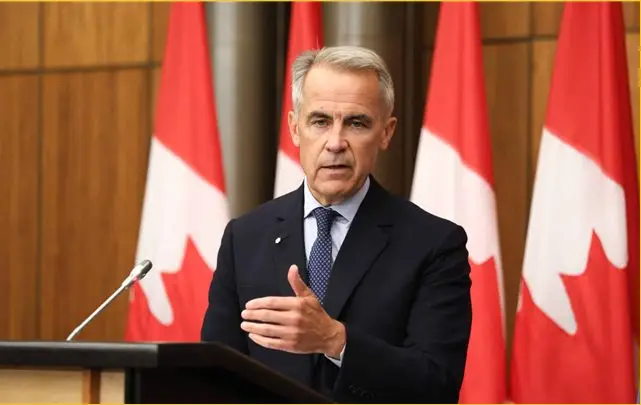

OTTAWA — Canadian Prime Minister Mark Carney publicly contradicted U.S. Treasury Secretary Scott Bessent on Tuesday, denying that he retracted his World Economic Forum criticisms during a Monday phone call with President Donald Trump, according to multiple statements made to reporters in Ottawa. “I meant what I said in Davos,” Carney stated outside a cabinet meeting, directly rejecting Bessent’s Fox News claim that he “very aggressively” walked back his remarks.
Conflicting Accounts of Private Conversation
The dispute centers on a Monday phone call between Trump and Carney that the U.S. Treasury secretary characterized one way and the Canadian prime minister described entirely differently. Bessent told Fox News’ “Hannity” program Monday evening that he witnessed Carney “very aggressively walking back some of the unfortunate remarks he made at Davos” during the conversation with Trump. The Treasury secretary was present in the Oval Office during the call, he said.
Carney flatly rejected that characterization Tuesday morning. “To be absolutely clear, and I conveyed this to the president, I meant what I said in Davos,” Carney told journalists. When asked directly whether he walked back his comments, the prime minister responded with a single word: “No”.
What Carney Actually Told Trump
The Canadian leader clarified what he communicated during the phone call, describing it as diplomatic acknowledgment rather than retreat. “Canada was the first country to understand the change in U.S. trade policy and we are adjusting to that,” Carney explained to reporters. The prime minister said the conversation covered topics beyond trade tensions, including Arctic security and the situations in Ukraine and Venezuela.
Carney positioned his remarks as recognizing Trump’s policy shifts while maintaining his Davos stance. He told Trump that Canada grasped “the broader set of issues” and was responding accordingly, according to his statements to the press. The prime minister’s office did not release an official readout of the call—a departure from standard practice for leader-to-leader conversations dating to the Jean Chrétien era.
The Davos Speech That Sparked Tensions
Carney delivered his controversial address at the World Economic Forum on January 20, 2026, urging middle powers to unite against economic coercion by superpowers. Without naming Trump directly, the prime minister warned that “great powers” were weaponizing economic integration and criticized “American hegemony”. “In an era marked by rivalry among great powers, nations caught in between face a choice: to vie against each other for favor, or to unite in pursuit of an impactful third path,” Carney said in the speech.
The address received a rare standing ovation in Davos, an unusual response for a Canadian leader at the forum. Carney specifically urged middle powers to stop complying with U.S. demands merely for the sake of harmony, stating: “If you are not at the table, you are on the menu”.
Trump Administration’s Public Pressure Strategy
The public contradiction exposes a pattern where U.S. officials characterize private diplomatic conversations in ways that suggest allied leaders are backing down—only to have those leaders directly dispute the accounts. Bessent’s Fox News appearance Monday evening represented the Trump administration’s first public description of the call. No U.S. official statement or press release accompanied the characterization.
Trump previously responded to Carney’s Davos remarks by warning the Canadian leader to “be cautious with his language,” adding that “Canada lives because of the United States”. The president has also consistently referred to Carney as “governor” rather than “prime minister”—a rhetorical choice that implies Canada lacks full sovereignty.
Trade Tensions and Tariff Threats
The diplomatic dispute unfolds against escalating trade pressure from Washington. Trump threatened Canada with 100% tariffs over potential China trade deals and revoked Canada’s invitation to his “Board of Peace” following the Davos speech. The president’s tariff threats appear designed to influence upcoming negotiations on the U.S.-Mexico-Canada Agreement (USMCA), which faces formal review later this year.
Carney acknowledged Monday that he expects “a robust review” of the continental trade pact, with trade experts predicting the Trump administration will seek additional concessions from Canada. The prime minister told Trump during their call that Canada reached only a limited tariff reduction agreement with China on specific products—electric vehicles and agricultural goods—to resolve trade irritants, similar to U.S. actions on soybeans.
The Instagram post documents Bessent’s original Fox News claim about Carney walking back his remarks, which the Canadian prime minister subsequently contradicted.
Accountability Gap in Diplomatic Communications
The public can rarely verify what actually occurs in private leader-to-leader phone calls, as governments typically control the narrative through official readouts. This case represents an unusual transparency moment where competing accounts force scrutiny of diplomatic claims. Neither the Canadian Prime Minister’s Office nor the White House released a joint statement or agreed summary of the Monday conversation.
The contradiction leaves unclear whether the two leaders genuinely understood the conversation differently or whether one side is deliberately mischaracterizing it for political advantage. Trade negotiations between the countries will proceed with this unresolved dispute over basic facts about what was discussed and agreed.
Carney maintained his defiant posture Tuesday, telling reporters he stood by his call for middle powers to form a coalition countering U.S. influence under Trump. The prime minister’s willingness to publicly contradict a senior U.S. official’s account marks a significant diplomatic risk as USMCA review talks approach.
