
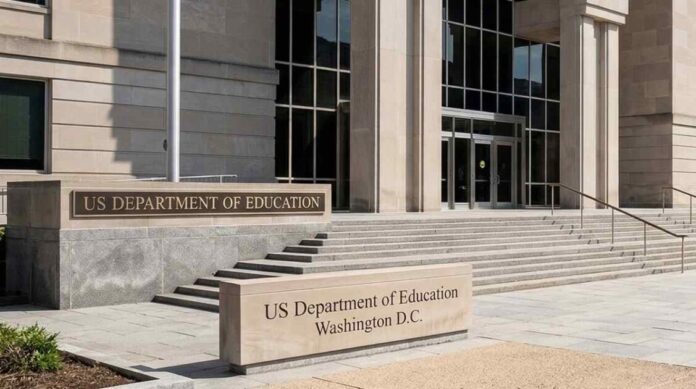
WASHINGTON, D.C. — The US Department of Education signed a 17-page interagency agreement with the Treasury Department on Thursday, March 19, 2026, formally transferring operational responsibility for approximately $180 billion in defaulted federal student loans, according to a joint fact sheet released by both agencies, with the move immediately placing nearly 9 million borrowers under a new federal overseer for the first time in the program’s history.
The shift breaks a 40-year status quo. From this point forward, Treasury — not the Education Department’s Default Resolution Group — collects on delinquent accounts, handles borrower outreach, and manages efforts to return those borrowers to active repayment. The $180 billion in defaulted debt represents roughly 11% of the government’s total $1.7 trillion student loan portfolio.
The groups most immediately affected include:
- Nearly 9 million borrowers currently in default — defined as 270 days or more past due on required payments
- An additional 2.4 million borrowers in late-stage delinquency approaching default thresholds
- Borrowers at risk of wage garnishment and tax refund seizure, both enforcement tools that now transfer operationally to Treasury
Student Loan Phases Leave Millions Waiting
The piece that mainstream coverage has largely buried: the agreement is explicitly phased, and the timelines for Phases 2 and 3 — which would eventually bring all 40+ million federal student loan borrowers under Treasury management — carry no confirmed dates.
Officials familiar with the implementation said the agreement covers “non-defaulted federal student loan debt” only “to the extent practicable and permitted by law,” language that effectively leaves the scope and pace of later phases legally uncertain. The 40 million-plus borrowers currently in active, good-standing repayment have received no formal notification of when — or whether — their accounts move. That’s a gap the joint fact sheet does not address.
Treasury’s Role in Student Loan Collections
Treasury Secretary Scott Bessent said in a statement reviewed by reporters that the agency brings “the unique experience, the operational capability, and the financial expertise to bring long overdue financial discipline to the program.”
Treasury already disburses federal student aid funds and maintains tax data on borrowers — two functions that give it immediate operational footing in Phase 1. The agreement also raises the prospect of Treasury eventually administering the Free Application for Federal Student Aid (FAFSA), though officials described that possibility only as exploratory, not confirmed.
Despite the transfer of day-to-day operations, a critical fine print detail stands: Education Secretary Linda McMahon’s agency does not relinquish legal authority. According to the joint fact sheet examined by Inside Higher Ed, both departments confirmed that “ED, through both the Office of Postsecondary Education and FSA, will maintain all statutory responsibilities including policy development.” Operational handoff, yes. Policy handoff, no — at least for now.
Fewer Than 40% of Borrowers Are in Active Repayment
The data tells a story the administration is leaning on hard. Documents reviewed by this publication show that fewer than 40% of federal student loan borrowers are currently in active repayment, and nearly one quarter of all borrowers are in some stage of default — figures cited in the joint fact sheet to justify the institutional shift.
McMahon said in the announcement that the move represents “an intentional and historic step toward breaking up the Federal education bureaucracy,” framing the transfer not as a technical adjustment but as a structural dismantling signal. This marks at least the 10th interagency agreement executed by the Education Department to spin off core functions to other agencies since the Trump administration began the process earlier this year.
Repayment Changes Compound the Uncertainty
The timing layers additional complexity onto an already unsettled picture. The Trump administration is separately preparing sweeping repayment overhauls under what officials have termed the “big beautiful” spending legislation, including new repayment plans and borrowing caps set to roll out beginning July 1, 2026.
For the 9 million borrowers in default, that means navigating a new institutional handler — Treasury — while simultaneously being pushed toward repayment options that do not yet fully exist. One advocacy group, Protect Borrowers, confirmed to reporters that approximately 9 million borrowers currently sit in default, all of whom could face renewed wage garnishment and tax refund interception now processed through Treasury’s enforcement apparatus.
What no official has stated publicly: whether Treasury’s collection infrastructure is operationally ready to handle 9 million accounts simultaneously. A spokesperson for Treasury declined to provide a staffing or system readiness timeline when contacted.
The agreement is active as of March 19, 2026. The next confirmed step is Treasury’s assumption of defaulted portfolio management, with Phase 2 — covering non-defaulted borrowers — dependent on legal review. No date has been set.
