
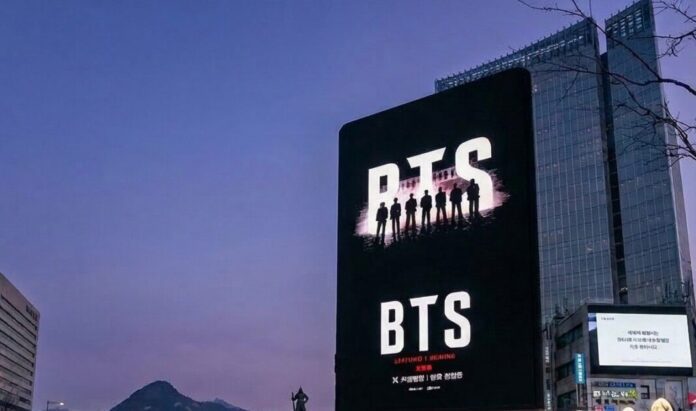
SEOUL, South Korea — BTS will perform its long-awaited comeback concert this Saturday, March 21, at Gwanghwamun Square in central Seoul, according to AP, drawing an expected crowd of roughly 260,000 people to one of South Korea’s most historically charged public spaces.
The concert marks the first time all seven members appear on stage together since the group entered a compulsory military service hiatus that effectively paused their career as a unit. It is a free outdoor show, with 20,000 ticketed fans inside the venue footprint and an estimated 240,000 others expected to fill surrounding streets and watch on temporary screens.
What makes Saturday different from any ordinary comeback is that this performance doubles as a national event. Seoul authorities plan to block roads, reroute subway trains past certain stations, and close Gyeongbokgung Palace for the night. The city is treating the show less like a concert and more like a state occasion.
Why BTS Chose Gwanghwamun Over Any Arena
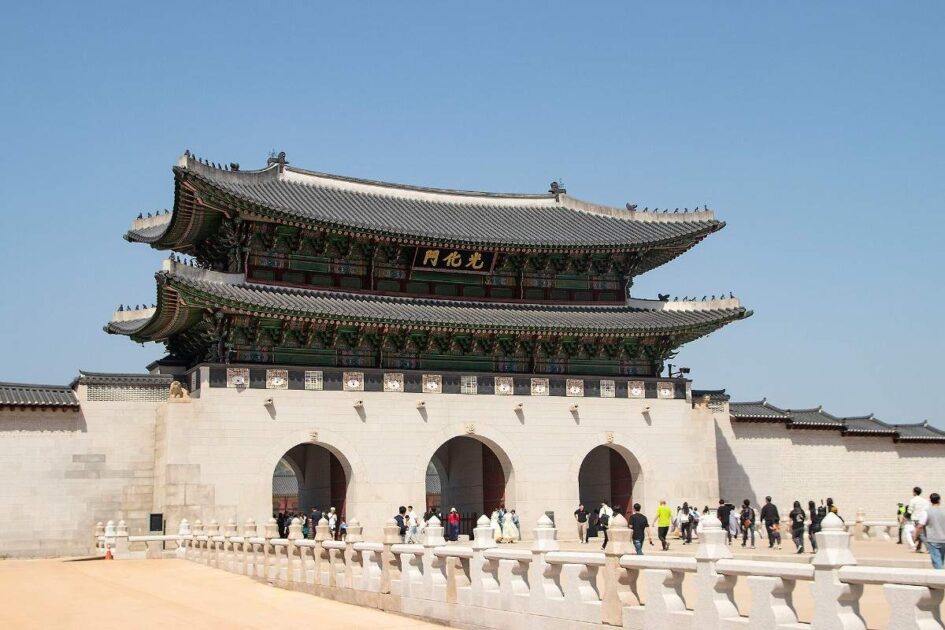
Gwanghwamun Gate at Gyeongbokgung Palace, the royal landmark that gives Gwanghwamun Square its cultural and historic significance
The choice of venue is not incidental. Hybe Corp., the parent company of BTS‘s management agency, told AP that the group’s new album, ARIRANG, takes its title from the most beloved traditional folk tune on the Korean Peninsula — and Gwanghwamun was selected specifically to match that symbolic weight.
“‘ARIRANG’ is an album that embodies the origin and identity of BTS and carries the message that they want to convey now,” Hybe said in a statement reviewed by AP reporters. “Considering the symbolic significance of the word ‘Arirang,’ we’ve decided to hold a performance at Gwanghwamun, a place that represents Korea.”
The square sits in the shadow of Gyeongbokgung Palace, the seat of Korea’s Joseon dynasty for more than 500 years. It holds giant statues of King Sejong, who created the Korean script in 1443, and navy admiral Yi Sun-shin. It is also, more recently, the ground where South Koreans gathered to protest former President Yoon Suk Yeol’s martial law declaration in late 2024.
BTS Concert Puts 240,000 Fans on Seoul’s Streets
The logistical scale of the event is the detail most mainstream coverage has treated as a footnote. Officials confirmed that in addition to the 20,000 ticketed attendees inside the square’s formal perimeter, an estimated 240,000 more people will gather in nearby areas, watching on outdoor screens the city is installing for the purpose, according to AP.
That means Gwanghwamun’s surrounding streets, already among Seoul’s busiest, will carry a crowd roughly the size of a midsize city in a single evening. Seoul Metropolitan Government has confirmed subway trains will bypass select central stations during peak crowd hours, and Gyeongbokgung Palace — a major tourist destination directly adjacent — will be fully shut down for the night.
The concert will also stream globally on Netflix, the broadcaster that has held an official partnership with BTS‘s label for the comeback. South Korean President Lee Jae Myung called BTS “a proud artist of the Republic of Korea” in a post on X on Wednesday, expressing hope the concert will showcase “our beautiful cultural heritage and the charm of K-culture.”
That presidential endorsement has practical implications. South Korean officials have framed the concert as a soft-power event, believing it will extend the country’s cultural influence internationally — a view that explains the unusual level of public-sector coordination for what is technically a private entertainment event.
Seoul Residents Push Back on Concert Disruption
Not everyone in central Seoul is celebrating. Some residents have publicly criticized what they describe as preferential treatment extended to BTS, pointing to road closures, palace shutdowns, and transit disruptions as an unreasonable imposition on the public. Their voices appear in AP‘s coverage but have received less weight in the wider conversation than the anticipated cultural payoff.
Cultural critic Ha Jae-keun, cited by AP, pushed back directly on that criticism. “BTS is the nation’s band,” Ha said. “Now they intend to hold an open performance for the public free of charge. I think it would be very natural for the government to support it.”
Pop culture commentator Jung Dukhyun added a broader frame: Gwanghwamun was selected, in his view, because traditional Korean culture and local identity have proven they can resonate globally — a thesis reinforced this week when the animated film KPop Demon Hunters won the Oscar for best animated feature and best song.
BTS Comeback Signals a New Chapter After Military Hiatus
ARIRANG is BTS‘s first full-group album in almost four years. All seven members completed mandatory military service, a legal requirement for male South Korean citizens, and the group’s return has been framed both by management and cultural observers as the start of a new artistic era rather than a simple resumption of activity.
The one-hour performance at Gwanghwamun sets the stage for what Hybe has separately announced as the ARIRANG World Tour. Presales for international dates reportedly sold out. What remains publicly unconfirmed is the full tour schedule beyond Saturday night’s opening show in Seoul.
As of Thursday, March 19, there has been no official statement on whether the road closure and transit disruption plan will be adjusted based on crowd forecasts. Seoul authorities declined to specify which subway stations would be affected beyond confirming that some trains will pass through without stopping.
