
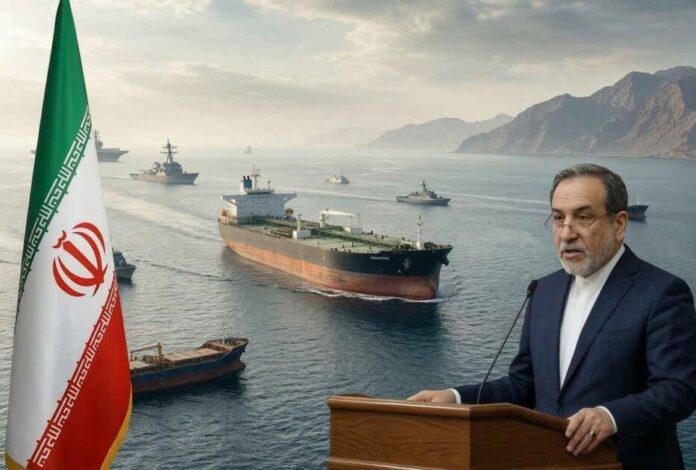
NEW DELHI — Iranian Foreign Minister Abbas Araghchi publicly accused the United States of hypocrisy on Saturday, March 13, after Washington issued emergency waivers allowing India and other nations to purchase sanctioned Russian crude oil — the same oil the US spent months pressuring New Delhi to stop buying, according to statements reviewed by reporters and confirmed by the US Treasury Department.
The reversal is blunt: as recently as February 2026, India had formally committed — under a US-India trade framework — to curtail Russian oil imports in exchange for reduced tariffs. Within two weeks of the US-Iran war erupting on February 28, Washington tore up that pressure campaign entirely.
US Waiver Exposes Iran-Triggered Energy Crisis
Brent crude surged past $100 per barrel after Iran shut the Strait of Hormuz, the chokepoint through which roughly one-fifth of the world’s oil supply flows. The US Treasury Department issued a first waiver on March 5 specifically for India, and a second broader waiver on March 12 covering all nations — permitting purchase and delivery of Russian crude cargoes already loaded onto vessels as of that date, with the licence valid until April 11.
“To enable oil to keep flowing into the global market, the Treasury Department is issuing a temporary 30-day waiver to allow Indian refiners to purchase Russian oil,” US Treasury Secretary Scott Bessent said in a social media post, adding that the measure covers only oil “already stranded at sea” and would not generate “significant financial benefit to the Russian government”.
Araghchi had no interest in that framing. “The US spent months on bullying India into ending oil imports from Russia,” he wrote on X on Saturday. “After two weeks of war with Iran, the White House is now begging the world — including India — to buy Russian crude”.
India’s Russian Oil Surge Hits 1.5 Million Barrels Per Day
India moved quickly. Data examined by reporters from commodity analytics firm Kpler shows Indian refiners purchased roughly 30 million barrels of Russian crude in the immediate aftermath of the first waiver — Indian Oil Corporation and Reliance Industries each buying approximately 10 million barrels of unsold cargoes already moving through Asian waters.
India’s total Russian crude imports jumped to 1.5 million barrels per day (bpd) in the first week of March, a 50 percent surge from February volumes, according to Kpler analyst Sumit Ritolia.
The underreported dimension is the scale of India’s total exposure: the Strait of Hormuz normally carries 2.6 million bpd of crude bound for India each month — along with 55 percent of its cooking gas imports and roughly 30 percent of its LNG shipments. Even with incremental Russian barrels filling part of the gap, a supply shortfall of approximately 1.6 million bpd remains, according to Kpler’s vessel-tracking data.
The Fine Print Both Waivers Leave Out
The US structured both licences to apply only to cargoes already loaded — a deliberate constraint designed to limit new Russian revenue. But the practical effect for Indian buyers differs from the political optics: Indian Oil Corporation, Reliance Industries, and other registered purchasers face a hard deadline of April 11 (under the second waiver) to complete transactions, with no guarantee of extension.
Equally buried: the February 6 Executive Order that initially rolled back 25 percent punitive tariffs on Indian goods had been explicitly conditioned on India committing to stop purchasing Russian oil — directly or indirectly. Officials confirmed the rollback and the condition, but neither the White House nor New Delhi has explained how the emergency waiver squares with that commitment, according to documents reviewed by reporters.
Iran Plays the Hypocrisy Card — Strategically
Araghchi’s post appeared alongside a Financial Times headline reporting that rising crude prices were delivering Moscow a significant revenue windfall — a pointed subtext: Washington’s waiver was effectively funnelling money to Russia even as it maintained sanctions in other areas.
He extended the criticism to Europe, writing: “Europe thought backing illegal war on Iran would win US support against Russia. Pathetic”. The remark landed as several European capitals faced simultaneous energy pressure from both the Russian–Ukraine conflict and Middle East supply cuts.
Iran has not closed off India as a partner, despite the conflict. Tehran allowed two India-flagged LPG carriers safe passage through the Strait of Hormuz on humanitarian and trade grounds. Iran’s ambassador to India, Mohammad Fathali, told reporters Tehran would continue to accommodate Indian-bound vessels, describing the two countries as “friends” with “a common fate,” according to Reuters.
What the Numbers Actually Say
| Metric | February 2026 | March 2026 |
|---|---|---|
| India’s Russian crude imports | ~1.0 million bpd | 1.5 million bpd |
| Brent crude price | ~$66/barrel | $100+/barrel |
| Hormuz daily flow to India | 2.6 million bpd | Near zero |
| Incremental Russian barrels acquired | Baseline | +1–1.2 million bpd |
What Comes Next for India’s Supply Gap
The war remains ongoing, and the Strait of Hormuz closure shows no signs of lifting before the April 11 waiver deadline. Indian energy officials have not publicly addressed how refiners plan to manage the remaining 1.6 million bpd shortfall once Russian stranded cargoes are exhausted. LPG panic-buying was reported in several cities in the week of March 10, though the government maintained that domestic fuel stocks remain stable.
Neither the White House nor New Delhi has responded to questions about what replaces the waiver after April 11 — or whether the tariff concessions tied to India’s earlier pledge to reduce Russian imports will now be renegotiated. That thread is still open.
